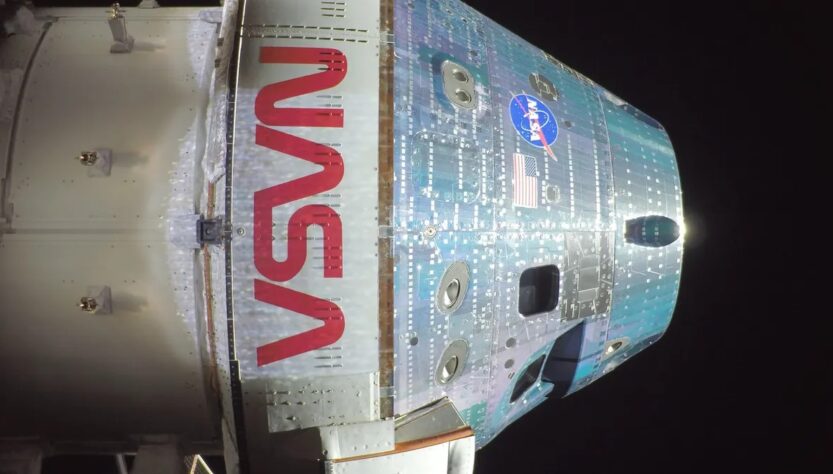
You can’t make this stuff up. While the Artemis II crew hurtles toward the Moon in what’s supposed to be a landmark deep-space mission, one of the biggest headlines isn’t lunar vistas or groundbreaking science—it’s a toilet that can’t handle its own urine without turning into an ice block. Shaking my head here. NASA dropped somewhere between $23 and $30 million on this fancy Universal Waste Management System (UWMS) for the Orion capsule, and it still needs a solar-powered “bake-out” maneuver to thaw frozen pee. What exactly is going on over there?
This is how they described it before it failed.
Since everyone always asks… 🤔
— NASA Artemis (@NASAArtemis) April 4, 2026
The universal waste management system aboard the Orion spacecraft is a compact, 5-cubic-foot toilet designed for microgravity. Solid waste is stored in odor-controlled canisters, while pre-treated urine is vented overboard daily. pic.twitter.com/uV78lFHgWl
The Fancy Toilet That Wasn’t Quite Ready for Primetime
The UWMS is no ordinary potty. It’s a high-tech, vacuum-driven system built for microgravity, complete with a contoured seat, handrails, foot restraints, and a private-ish hygiene bay with a door or curtain. Urine gets sucked into a tank and vented overboard into space, while solids are stored for return to Earth. NASA designed it to be more comfortable and hygienic than the old Apollo-era bags, funnels, and diapers—responding to years of astronaut complaints.
JUST IN🚨: The Artemis II toilet’s vent froze over, potentially causing the terrible smell astronauts reported.
— All day Astronomy (@forallcurious) April 4, 2026
NASA is tilting the space ship toward the Sun to try & thaw it out. pic.twitter.com/SglIR0Mg4g
It even uses advanced materials like 3D-printed titanium parts and has to work reliably for both male and female crew members. On paper, it’s a big upgrade for long-duration missions. In reality? The Artemis II astronauts—Reid Wiseman, Victor Glover, Christina Koch, and Jeremy Hansen—had to deal with glitches almost right after launch on April 1, 2026.Early on, there was a fan or controller issue that jammed the urine system (poop side worked fine, thankfully). Crew switched to backup collapsible contingency urinals—basically fancy plastic bags that vent to space. Then came the real head-scratcher: frozen urine blocking the vent line in the waste tank.
How Do You Thaw a $23 Million Toilet in Space?
Mission controllers figured out the blockage was likely ice from the extreme cold of space. Their brilliant fix? Tell the crew to rotate the entire Orion capsule so the vent line faces the Sun. This “bake-out” maneuver used solar heat to melt the plug. It worked partially at first—some urine vented successfully, sparkling like crystals in the vacuum—and with some heater help, the system eventually got back online.Astronauts were reportedly relieved once it was fixed, and the mission continued smoothly otherwise. But come on. You’re sending people hundreds of thousands of miles from Earth, and basic waste management turns into an improvised science experiment? The toilet issues provided “valuable data” for future flights, according to NASA. Sure, but at what cost to taxpayer patience?
🚨🇺🇸 The Artemis II toilet is back online. After 2 hours of pointing it at the sun.
— Mario Nawfal (@MarioNawfal) April 4, 2026
The fix for a $23 million space toilet was: sunlight.
4 astronauts heading to the Moon just had to wait for their bathroom to thaw. NASA called it a "waste dump." The crew probably called it a… https://t.co/zLo7Qu6NR4 pic.twitter.com/IQExY7FeS1
The Price Tag That Makes It Sting Even More
This isn’t some off-the-shelf bathroom fixture. Reports peg the development cost at around $23 million for the units (with some outlets citing closer to $30 million). That makes it one of the most expensive toilets ever built—second only to the old Space Shuttle system’s price tag from decades ago. The money went into zero-g engineering, redundancy, testing, and making sure nothing leaks or clogs in the harsh environment of deep space.Y
et here we are, with the thing freezing up anyway. You have to wonder: with all that funding, expertise, and time, how did the team miss that urine might freeze in a vent line exposed to space temperatures? It’s not like this is the first time humans have dealt with waste in orbit—Skylab and the ISS had working systems without this level of drama.
Meanwhile, Over at SpaceX…I
t’s hard not to draw the comparison. While NASA wrestles with a multimillion-dollar commode that requires orbital sunbathing to function, Elon Musk’s SpaceX has been quietly (mostly) handling crew waste on Crew Dragon missions to the ISS. Their system isn’t perfect—there have been suction fan hiccups on past flights like Inspiration4—but they’ve iterated quickly, redesigned parts, and kept crews flying without turning every minor glitch into a rotating-the-whole-spaceship event.SpaceX’s approach feels more… pragmatic. Faster development cycles, commercial pressure to actually deliver reliable hardware, and a track record of fixing issues without endless bureaucratic hand-wringing. Bet their toilets don’t need emergency solar thawing maneuvers mid-mission. Just saying.
Bottom Line: Time for NASA to Get It Together
Look, space is hard. No one disputes that. Engineering for microgravity, radiation, and vacuum is insanely complex, and the Artemis II team deserves credit for troubleshooting on the fly while the mission presses on toward the Moon. The toilet glitches haven’t endangered the crew, and lessons learned will (hopefully) make future Artemis flights better.
But shaking my head at the optics: a $23–30 million toilet that can’t reliably vent urine without creative problem-solving? That’s the kind of story that makes people question where all the money is going. NASA has brilliant people and ambitious goals, but moments like this highlight why many are frustrated with the agency’s pace and execution on Artemis.
If we’re serious about returning to the Moon and pushing to Mars, basic life support systems—like not having astronauts resort to backup bags because the fancy toilet iced over—need to work out of the gate. Maybe take a page from the private sector’s playbook. After all, when you’re that far from home, the last thing you want to worry about is whether the bathroom is going to cooperate.